

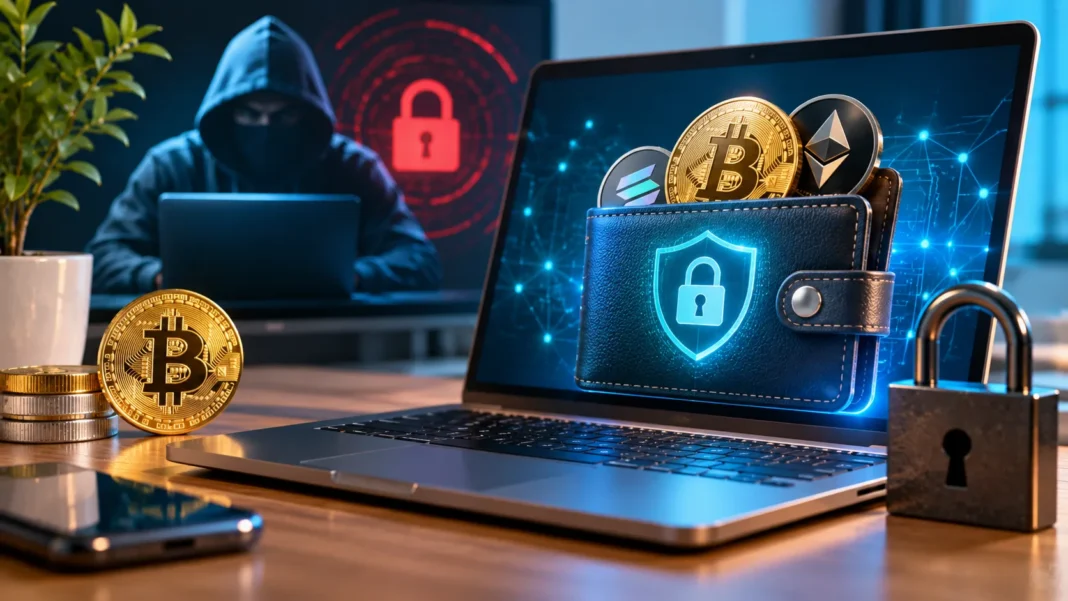

Cryptocurrency wallets help people manage digital assets, but they also introduce security risks that every user should understand. Unlike traditional bank accounts, many crypto wallets allow users to control their own private keys and authorize transactions directly. This flexibility comes with responsibilities because stolen credentials, fraudulent transactions, and lost recovery information can lead to permanent financial losses.
Crypto wallet security involves protecting private keys, recognizing scams, securing devices, and understanding how blockchain transactions work. Common threats include phishing websites, malicious software, fake wallet applications, social engineering, and dangerous smart contract permissions. Even experienced users can encounter problems when they overlook important security precautions.
This guide explains the most common cryptocurrency wallet security risks and how they can affect digital assets. You will also learn about hot wallets, cold wallets, seed phrase protection, phishing attacks, wallet permissions, and practical security habits. Understanding these risks can help you make more informed decisions about digital wallet safety.
What Is Crypto Wallet Security?
Crypto wallet security refers to the measures used to protect the credentials and systems that control cryptocurrency assets. A cryptocurrency wallet does not usually store coins directly inside an application or physical device. Instead, it manages cryptographic keys that allow users to interact with assets recorded on a blockchain.
A private key is particularly important because it can authorize transactions associated with a cryptocurrency address. Anyone who gains control of the necessary private credentials may be able to transfer the associated assets. This is why protecting wallet access requires more than choosing a strong application password.
Wallet security also involves recognizing fraudulent websites, malicious transactions, and unsafe digital environments. Different wallet designs provide different levels of protection and responsibility. Understanding how a wallet manages private keys is an important starting point for evaluating its security.
How Does a Cryptocurrency Wallet Work?
A cryptocurrency wallet uses cryptographic technology to help users manage blockchain addresses and authorize transactions. Most wallets generate or manage private keys and corresponding public information. The blockchain records balances and transactions, while the wallet provides an interface for interacting with those records.
When a legitimate transaction is authorized, the wallet uses the relevant private key to produce a digital signature. The blockchain network can verify this signature without receiving the private key itself. This process helps establish whether a transaction has been authorized by the controlling credentials.
Different wallets handle these functions in different ways. Some give users direct control of their private keys, while custodial services manage credentials on their behalf. Each approach creates different security considerations involving personal responsibility, service providers, and account recovery.
What Are the Main Types of Crypto Wallets?
Cryptocurrency wallets are commonly divided into hot wallets and cold wallets. Hot wallets operate in environments connected to the internet, while cold storage arrangements keep private signing credentials offline. Both approaches have advantages and limitations depending on how the systems are designed.
Software wallets may operate through desktop applications, mobile applications, or browser extensions. Hardware wallets use specialized devices to protect cryptographic credentials and authorize transactions. Custodial wallets, meanwhile, rely on a service provider to manage some or all of the underlying keys.
Understanding these differences is important because security responsibilities vary. A self-custody wallet places greater responsibility on the individual controlling the recovery information. A custodial service introduces additional risks involving account access, the provider’s security, and its financial or operational stability.
Hot Wallet Security Risks Explained
Hot wallets operate in internet-connected environments, making them convenient for digital transactions and application interactions. However, this connectivity creates potential exposure to malicious software, phishing attempts, and compromised devices. Their security depends on both the wallet application and the system where it operates.
For example, malware on a computer may attempt to steal sensitive information or interfere with transaction activity. Fraudulent browser extensions may imitate legitimate wallet interfaces. Users can also encounter deceptive websites designed to request dangerous permissions or confidential recovery information.
A hot wallet is not automatically unsafe simply because it connects to the internet. However, internet exposure increases the importance of secure devices, software updates, and careful verification. Security practices should reflect the risks associated with the particular wallet and its intended environment.
Cold Wallet and Hardware Wallet Security Risks
Cold storage arrangements are designed to reduce exposure of private keys to internet-connected systems. Hardware wallets commonly use specialized devices that keep sensitive credentials isolated during transaction signing. This can reduce certain risks associated with malware on ordinary computers.
However, hardware wallets are not immune to security problems. A compromised recovery phrase can allow someone to gain control of associated assets without possessing the original device. Physical damage, theft, counterfeit products, and incorrect transaction approvals also present potential risks.
The security benefits of cold storage depend on the complete system rather than the physical device alone. Recovery procedures, authentic hardware, and careful transaction verification remain important. No wallet design can completely eliminate human error or fraudulent manipulation.
What Are Private Keys and Why Must They Be Protected?
A private key is a secret cryptographic value used to authorize transactions involving associated cryptocurrency assets. It functions as a critical access credential within a blockchain system. Protecting it is essential because control of the key can determine who can transfer certain assets.
If another person obtains the private key, they may be able to authorize transactions without the legitimate owner’s permission. This creates a serious security concern for self-custody arrangements. Unlike many conventional account systems, blockchain transactions generally cannot be reversed by simply contacting customer support.
Private keys should therefore be treated as highly confidential information. They should never be disclosed to unexpected contacts, websites, or supposed support representatives. Legitimate support interactions should not require users to reveal the private credentials controlling their assets.
Seed Phrase Security: One of the Biggest Wallet Risks
A seed phrase, also called a recovery phrase, is a sequence of words used by many cryptocurrency wallets to restore access to associated private keys. It acts as a critical recovery credential. Someone who obtains the phrase may be able to gain control of the wallet’s assets.
A major security risk occurs when recovery phrases are exposed through phishing, compromised accounts, or insecure digital storage. Screenshots, email messages, and cloud-synchronized notes can create additional exposure. A password protecting a wallet application does not necessarily protect assets after the recovery phrase has been compromised.
Recovery information also creates a risk of permanent loss if it becomes unavailable to its legitimate owner. Secure backup arrangements must balance confidentiality with reliable recovery. Understanding a wallet’s official recovery process is essential because different products may use different methods.
How Phishing Attacks Target Crypto Wallets
Phishing attacks attempt to trick users into revealing confidential information or authorizing harmful actions. Cryptocurrency phishing frequently involves fake websites, misleading messages, and impersonated customer support accounts. Attackers often imitate familiar services to create a false sense of legitimacy.
A fraudulent message might claim that a wallet requires urgent verification or that an account has been restricted. It may direct the recipient toward an imitation website requesting sensitive credentials. Some phishing attempts instead encourage users to approve transactions they do not fully understand.
Warning signs include unexpected requests for recovery phrases, urgent threats, and unfamiliar links. Users should treat unsolicited messages cautiously, even when they appear to come from a recognizable organization. Independently verifying communications through official channels is an important protective habit.
Fake Crypto Wallet Apps and Browser Extensions
Fraudulent wallet applications can resemble legitimate software while attempting to steal confidential information. Some imitate familiar branding, interfaces, or product descriptions. This creates a risk for people who assume that a professional-looking application is automatically trustworthy.
Browser extensions are another area of concern because certain extensions can interact with websites and sensitive browser activity. Malicious extensions may request unnecessary permissions or display deceptive interfaces. A compromised extension can affect more than one online service.
Application authenticity should be evaluated carefully, including the developer’s identity and the software’s official distribution information. Unfamiliar downloads and unexpected installation requests deserve particular caution. A convincing logo or positive-looking review does not guarantee that an application is legitimate.
How Malware Can Compromise Crypto Wallets
Malware refers to malicious software designed to interfere with devices, steal information, or perform unauthorized activities. In cryptocurrency environments, certain malware may target saved credentials, wallet files, or transaction-related information. An infected computer or phone can therefore expose sensitive financial activity.
Some malicious programs attempt to capture keyboard input, monitor screens, or manipulate information displayed during transactions. Others try to access files containing confidential information. These threats demonstrate why wallet security depends partly on the security of the operating system.
Keeping devices updated and using reputable security protections can reduce some malware risks. Unnecessary software installations and suspicious attachments create additional exposure. If a device is believed to be compromised, it should not be trusted for sensitive account activity until appropriately assessed.
Social Engineering Scams in Cryptocurrency
Social engineering involves manipulating people into making decisions that compromise security. Rather than attacking the technical design of a wallet directly, scammers exploit trust, confusion, fear, or urgency. Cryptocurrency users may encounter these attempts through email, social media, messaging applications, and online communities.
One example involves someone pretending to be a customer support representative who offers to resolve a wallet problem. Another involves a fraudulent opportunity that requires the user to send funds or reveal credentials. These approaches can be convincing because they often imitate ordinary business communication.
A legitimate organization should not need a user’s private key or recovery phrase to provide general assistance. Unexpected financial requests and pressure to act immediately are warning signs. Taking time to verify information can prevent decisions based on misleading claims.
Smart Contract Approval and Wallet Permission Risks
Some blockchain applications use smart contracts, which are programs that execute specified functions on a blockchain. Wallet users may be asked to approve transactions or grant permission for these programs to interact with certain tokens. These permissions can carry important security consequences.
For example, an approval may authorize a smart contract to transfer a defined amount of a token. Broad or unlimited approvals can expose more assets if the contract or an authorized component is compromised. The level of risk depends on the contract, permissions, and associated security controls.
A transaction signature should not be treated as an ordinary website confirmation. Wallet prompts can authorize meaningful actions involving digital assets. Understanding the requested permission and recognizing unfamiliar contracts are important parts of responsible wallet security.
Why Crypto Transaction Verification Matters
Many cryptocurrency transactions become effectively irreversible after network confirmation. This means that sending assets to an incorrect address or authorizing an unintended transfer may result in permanent loss. Traditional payment dispute mechanisms often do not apply to blockchain transfers.
Transaction-related mistakes can arise from copied addresses, deceptive interfaces, or misunderstood network requirements. A wallet application may display a shortened address that conceals important differences. Fraudulent messages can also introduce incorrect transaction information.
Careful verification helps reduce accidental and unauthorized transfers. Users should understand what a wallet prompt is authorizing and be cautious when information does not match their expectations. Uncertainty is a reason to stop and seek reliable clarification rather than proceed under pressure.
Custodial vs. Non-Custodial Wallet Security
Custodial wallets involve a service provider managing private keys or access to cryptocurrency assets on behalf of users. This arrangement may provide familiar account-management features. However, it also creates dependence on the provider’s systems, policies, and operational reliability.
Non-custodial wallets give users direct control over their private credentials. This can reduce dependence on a central custodian, but it transfers greater security and recovery responsibilities to the user. Losing essential credentials may mean losing access without a conventional account recovery process.
Neither approach eliminates all financial or technical risks. Custodial services can experience security breaches, operational failures, or access restrictions, while self-custody systems remain vulnerable to credential exposure and mistakes. Understanding these differences is important before evaluating wallet security claims.
Passwords and Two-Factor Authentication
Strong passwords help protect wallet-related accounts and certain encrypted applications from unauthorized access. Reusing the same password across several services can increase exposure when one account is compromised. Unique credentials provide a more effective separation between services.
Two-factor authentication adds another verification step to supported online accounts. Depending on the service, this may involve an authenticator application, security key, or another approved method. However, two-factor authentication cannot reverse a blockchain transaction or protect a recovery phrase that has already been exposed.
It is also important to distinguish between an exchange account password and a self-custody wallet’s private keys. These credentials protect different parts of the system. Account security controls are useful, but they do not replace private-key confidentiality or responsible transaction verification.
Can Public Wi-Fi Put a Crypto Wallet at Risk?
Public Wi-Fi networks may expose devices to certain security risks, particularly when users connect to unfamiliar or poorly secured networks. Malicious network environments can create opportunities for deceptive login pages or other attacks. However, modern encrypted connections can protect against some forms of interception.
The risk depends on the device, applications, network configuration, and security practices involved. An unsecured network does not automatically reveal cryptocurrency private keys. Nevertheless, sensitive financial activities deserve additional care when the surrounding digital environment is unfamiliar.
Keeping operating systems and applications updated is important regardless of network type. Unexpected certificate warnings, suspicious login pages, and unusual connection behavior should not be ignored. Users should prioritize trusted environments for activities involving confidential financial information.
Why Software Updates Matter for Wallet Security
Wallet applications, operating systems, and device firmware may receive security updates to correct vulnerabilities. These updates can address technical weaknesses or improve existing protective features. Running outdated software can leave known problems unresolved.
However, cryptocurrency users should also recognize fraudulent update notifications. Attackers sometimes imitate legitimate software alerts to encourage installation of malicious applications. A message claiming that an immediate update is required should be verified rather than accepted automatically.
Official security updates are an important part of device maintenance. The same principle applies to browsers, mobile operating systems, and supported hardware wallet firmware. Reliable software maintenance reduces certain risks but does not eliminate scams or careless transaction approvals.
How to Recognize Crypto Wallet Scams
Crypto wallet scams often rely on promises, threats, or misleading claims that encourage immediate action. Common warning signs include guaranteed financial returns, unexpected account problems, and requests to reveal confidential credentials. Fraudulent contacts may claim to represent recognizable businesses or authorities.
Some scams involve fake investment platforms that display misleading account balances. Others claim that funds can be recovered after an initial payment. These situations are especially concerning because cryptocurrency transfers are often difficult to reverse once completed.
A useful warning sign is any request that combines financial pressure with secrecy or urgency. Legitimate financial decisions should allow time for independent verification. Treating unusual claims skeptically can help reduce exposure to fraudulent wallet-related activity.
What Happens if a Crypto Wallet Is Hacked?
A compromised cryptocurrency wallet can expose assets when an attacker gains access to usable signing credentials or obtains unauthorized transaction permissions. The consequences depend on the wallet architecture and the nature of the compromise. Some incidents affect only one account, while others expose multiple associated addresses.
Unfortunately, blockchain transactions are often irreversible after confirmation. A stolen asset is not automatically restored because the original owner reports the incident. Custodial platforms may have separate account protections or procedures, but recovery is not guaranteed.
Anyone who suspects a compromise should avoid sharing further credentials and seek assistance through verified support or appropriate reporting channels. Preserve relevant transaction records and communications. Be particularly cautious of supposed recovery experts who promise guaranteed results in exchange for additional payments.
Why Crypto Recovery Scams Are Dangerous
Recovery scams target people who have already experienced financial losses. Fraudsters may claim they can retrieve stolen cryptocurrency, reverse blockchain transactions, or access hidden recovery mechanisms. These promises can sound convincing to someone worried about missing funds.
A common warning sign is a demand for payment before any recovery work has been independently verified. Some fraudulent operators impersonate investigators, government agencies, or cybersecurity professionals. Others request wallet credentials, creating additional risks for the victim.
Cryptocurrency recovery outcomes depend on complex technical and legal circumstances, and many losses cannot be recovered. No individual should assume that a guaranteed recovery offer is legitimate. Reports to appropriate authorities and verified service providers are safer than trusting unsolicited recovery messages.
How to Evaluate Crypto Wallet Security Features
A wallet’s security should be evaluated through its overall design rather than marketing claims alone. Relevant factors include how private keys are managed, whether sensitive operations are isolated, and how recovery credentials are protected. Transparency about technical limitations is also important.
Independent security reviews may provide useful information, although an audit does not guarantee that software is free from vulnerabilities. Clear documentation, responsible update practices, and a credible development history can contribute to a more informed assessment. Security features must also be understandable to the people relying on them.
No wallet should be considered completely secure merely because it uses encryption or specialized hardware. User behavior, software integrity, and transaction authorization remain important. A realistic assessment considers both the technology and the responsibilities involved in operating it.
Common Crypto Wallet Security Mistakes to Avoid
One common mistake is sharing a recovery phrase with someone claiming to provide technical support. A seed phrase can grant extensive control over associated assets. Legitimate support services should not require this information to answer ordinary questions or investigate account problems.
Another mistake is approving unfamiliar wallet requests without understanding their implications. Certain permissions can authorize token transfers or other actions involving digital assets. Treating every confirmation prompt as harmless creates unnecessary exposure to malicious contracts and deceptive interfaces.
Ignoring device security is another important concern. Outdated applications, untrusted downloads, and compromised accounts can undermine otherwise strong wallet protections. Effective security requires attention to credentials, software, and personal decision-making rather than relying on one feature.
How to Build Better Crypto Wallet Security Habits
Good wallet security begins with understanding the difference between public addresses, passwords, private keys, and recovery phrases. These pieces of information serve different purposes and require different levels of protection. Confusing them can lead to unnecessary disclosure or preventable access problems.
Maintaining secure devices and treating unexpected communications cautiously are also important habits. Messages requesting urgent action, confidential credentials, or unexplained payments should raise concerns. A careful approach helps reduce exposure to attacks that depend on rushed decisions.
Security habits should be reviewed as technology and threats change. New software features may introduce different permissions, while scammers regularly adapt their messages. Continuous awareness and accurate information are more dependable than assuming a wallet will always remain secure without attention.
Conclusion
Crypto wallet security is essential for understanding the risks associated with managing cryptocurrency assets. Private key exposure, phishing attacks, fake applications, malware, and malicious smart contract permissions can all create serious problems. Because many blockchain transfers are difficult or impossible to reverse, security mistakes may have lasting financial consequences.
Different wallet designs provide different protections and responsibilities. Hot wallets offer internet-connected functionality, while cold storage can reduce certain online risks. However, neither approach eliminates credential theft, fraudulent manipulation, or errors involving transaction authorization.
The most effective approach to cryptocurrency wallet safety combines careful credential protection, secure software, informed decision-making, and awareness of common scams. Understanding how wallets operate makes it easier to recognize suspicious activity. No security measure guarantees complete protection, but responsible practices can reduce many avoidable risks.
Frequently Asked Questions About Crypto Wallet Security
What Are the Biggest Crypto Wallet Security Risks?
The biggest risks include stolen private keys, exposed recovery phrases, phishing attacks, malicious software, fake wallet applications, and unsafe smart contract permissions. These threats can lead to unauthorized transactions or permanent loss of digital assets.
Are Hardware Wallets Safer Than Software Wallets?
Hardware wallets can reduce certain online risks by keeping private keys isolated from internet-connected devices. However, they remain vulnerable to compromised recovery phrases, fraudulent transactions, and other user-related security problems.
Can Someone Steal Crypto With a Seed Phrase?
Yes. A recovery phrase can allow someone to restore access to associated wallet credentials and potentially transfer assets. It should be treated as highly confidential and never shared with unexpected contacts or websites.
Can a Hacked Crypto Wallet Be Recovered?
Recovery depends on the nature of the compromise and the wallet system involved. Many confirmed blockchain transactions cannot be reversed, making stolen cryptocurrency difficult to recover. Claims of guaranteed recovery should be treated skeptically.
How Can Beginners Understand Crypto Wallet Security?
Beginners should first learn how private keys, recovery phrases, wallet applications, and transaction approvals work. Understanding phishing, device security, and the limits of blockchain transaction recovery provides a useful foundation for recognizing common risks.