

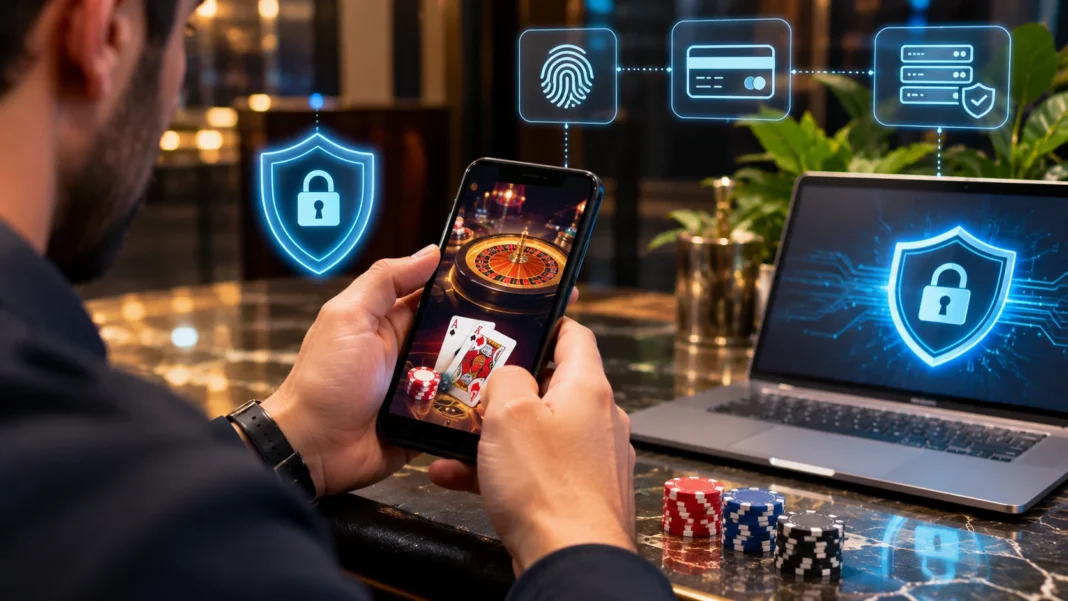

Imagine discovering that sensitive personal information has been exposed through a mobile application. You begin wondering how the information was stored, who had access to it, and whether stronger security measures could have prevented the incident.
Casino mobile security involves numerous technologies designed to protect personal information, financial records, and digital infrastructure. Although these systems operate behind the scenes, they play an important role in addressing cybersecurity threats and unauthorized access.
However, even advanced security technology cannot eliminate every privacy risk or the financial and psychological harms associated with gambling. This guide explains how mobile security systems operate, their limitations, and the responsibilities of organizations handling sensitive information.
What Is Casino Mobile Security?
Casino mobile security refers to the cybersecurity measures associated with mobile gambling software and its supporting digital infrastructure. These measures address the protection of sensitive information, communication networks, databases, and application components.
Security systems may include encryption, authentication, fraud monitoring, access controls, and vulnerability assessments. Each technology serves a different purpose within the broader information security framework.
The primary objective is to reduce unauthorized access, information theft, and system manipulation. However, security effectiveness depends on software design, organizational practices, and ongoing maintenance. No digital system can guarantee complete protection against cybersecurity threats.
Why Is Mobile Security Important in the Casino Industry?
Mobile applications that handle sensitive information can become attractive targets for cybercriminals. Personal records, identity documents, and financial information may have significant value when obtained illegally. Inadequate security can expose individuals to serious privacy risks.
A cybersecurity incident may also disrupt organizational operations and create regulatory consequences. Businesses handling sensitive information have responsibilities to protect it throughout its collection, storage, processing, and deletion.
Important objectives of mobile application security include:
- Protecting confidential information.
- Reducing unauthorized account access.
- Preventing financial data exposure.
- Detecting suspicious digital activity.
- Maintaining accurate transaction records.
- Reducing software vulnerabilities.
- Supporting regulatory compliance.
- Protecting the integrity of digital infrastructure.
These objectives require several complementary security measures. Depending entirely on one technology may leave important vulnerabilities unaddressed.
10 Technologies Behind Casino Mobile Security
Most mobile applications display relatively simple interfaces. However, their supporting infrastructure may include complex systems that process information, authenticate identities, and monitor suspicious activity.
The following ten technologies explain how cybersecurity operates behind the scenes.
1. Data Encryption
Sensitive information can become vulnerable when transmitted or stored without adequate protection. Encryption helps address this problem by transforming readable information into an encoded format.
Mobile applications commonly rely on Transport Layer Security, known as TLS, to protect information traveling between devices and servers. Encryption can also protect selected information stored within databases and other digital systems.
However, encryption does not guarantee complete security. Weak access controls, compromised devices, and inadequate encryption key management may still expose sensitive information.
2. Multi-Factor Authentication
Passwords alone may provide insufficient protection when credentials become compromised. Multi-factor authentication introduces additional identity verification requirements to reduce unauthorized access.
Authentication systems may combine different categories of evidence, such as something a person knows and something they possess. Some systems also incorporate biometric characteristics into their authentication processes.
These additional security layers can reduce certain account-related risks. Nevertheless, authentication methods differ in their resistance to phishing and other cyberattacks. Strong implementation and secure recovery processes remain important.
3. Biometric Security Technology
Traditional passwords can be forgotten, stolen, or reused across multiple applications. Biometric technology provides another method of verifying a person’s identity through physical characteristics.
Modern mobile devices may support fingerprint recognition or facial recognition. Depending on the implementation, biometric information can remain within protected device components rather than being shared directly with application providers.
However, biometric authentication cannot eliminate every security concern. Organizations must consider privacy requirements, device limitations, and appropriate handling of sensitive biometric information.
4. Fraud Detection Systems
Unusual digital activity can be difficult to identify when organizations process large volumes of information. Fraud detection systems help analyze patterns and identify events that may require further investigation.
These systems may combine statistical analysis, automated rules, and machine learning technologies. Their objective is to recognize potentially unauthorized or suspicious activity without depending entirely on manual monitoring.
Automated detection systems can produce incorrect results. Human oversight remains important when investigating alerts and making decisions that could affect individuals.
5. Secure Data Storage
Collecting sensitive information creates responsibilities that continue long after the initial interaction. Poorly protected databases may expose personal records to unauthorized individuals or organizations.
Secure data storage involves measures such as encryption, restricted access, protected backups, and appropriate retention policies. Mobile applications may also use operating system security features to protect locally stored information.
Organizations should avoid retaining unnecessary sensitive data. Limiting information collection and storage can reduce the potential impact of future cybersecurity incidents.
6. Application Security Testing
Software vulnerabilities can remain unnoticed during ordinary application development. Even a visually polished mobile interface may contain underlying programming or configuration problems.
Security testing helps organizations identify potential weaknesses before they cause serious incidents. Qualified cybersecurity professionals may examine software code, communication systems, authentication mechanisms, and infrastructure configurations.
Testing should occur throughout the software development lifecycle. A successful assessment at one point in time does not guarantee that future software versions will remain secure.
7. Network Security Systems
Mobile applications frequently communicate with remote servers and supporting services. These connections can introduce security concerns if network traffic is inadequately protected or monitored.
Network security systems may include firewalls, traffic monitoring technologies, and infrastructure segmentation. These measures help limit unauthorized communication and reduce exposure to certain cyber threats.
Network security also depends on correct configuration and timely maintenance. Poorly managed infrastructure can undermine otherwise effective application-level protection.
8. Identity Verification Technology
Digital organizations may need to establish whether individuals meet applicable identity and legal eligibility requirements. Identity verification technologies help support these regulatory and security responsibilities.
Verification processes can involve sensitive personal records. Consequently, organizations must protect collected information against unauthorized access, inappropriate disclosure, and unnecessary retention.
Identity and age restrictions serve important protective purposes. These safeguards should never be bypassed, and verification systems must operate within applicable privacy and consumer protection requirements.
9. Software Updates and Vulnerability Management
Cybersecurity threats continue to change as software weaknesses are discovered. Applications that receive insufficient maintenance may remain exposed to known vulnerabilities.
Vulnerability management involves identifying software weaknesses, assessing their potential impact, and applying appropriate security improvements. Regular updates help address certain problems discovered after software deployment.
However, installing updates is only one part of maintaining secure digital infrastructure. Organizations must also review third-party dependencies, configuration changes, and newly introduced software components.
10. Security Monitoring and Incident Response
Cybersecurity incidents can occur despite preventive measures. Organizations therefore need systems that help detect problems and coordinate appropriate responses.
Security monitoring may involve reviewing system records, investigating unusual activity, and identifying potential unauthorized access. Incident response procedures help organizations contain problems and assess their consequences.
Effective incident response may also involve notifying affected individuals and relevant authorities when required. Transparent communication and appropriate corrective action are important organizational responsibilities.
Mobile Security Technologies Compared
Understanding how different security technologies work can become confusing because many systems share similar objectives. However, each addresses particular aspects of digital information protection.
| Security Technology | Primary Function |
|---|---|
| Data encryption | Protects information confidentiality |
| Multi-factor authentication | Strengthens identity verification |
| Biometric technology | Supports device-based identity authentication |
| Fraud detection | Identifies potentially suspicious activity |
| Firewalls | Controls network communication |
| Security testing | Identifies potential software weaknesses |
| Secure storage | Protects retained sensitive information |
| Access controls | Restricts information access |
| Security monitoring | Detects potential security incidents |
| Software updates | Addresses known software vulnerabilities |
These technologies provide complementary protection rather than interchangeable solutions. Effective cybersecurity requires coordinated management across the entire digital infrastructure.
How Encryption Protects Mobile Information
Encryption is frequently mentioned in cybersecurity discussions, but its purpose is sometimes misunderstood. Many people assume encrypted information automatically becomes impossible to steal or misuse.
Security professionals generally distinguish between two important categories:
- Data in transit: Information moving between devices, applications, and servers.
- Data at rest: Information stored within databases, devices, backups, and other storage systems.
Both categories require appropriate protection. Encryption reduces certain confidentiality risks, but organizations must also protect encryption keys, control information access, and maintain secure software configurations.
How Financial Information Is Protected Behind the Scenes
Applications that process financial information introduce additional cybersecurity and privacy concerns. Unauthorized access to sensitive payment records can result in financial fraud and identity-related problems.
Payment security technologies may include encryption, tokenization, restricted database access, and transaction monitoring. Tokenization replaces certain sensitive information with substitute identifiers, reducing the need to expose original data within specific systems.
However, these measures cannot prevent every financial risk. Cybersecurity protections also do not eliminate gambling-related financial losses. Organizations handling financial information must follow applicable payment security and privacy requirements.
Common Cybersecurity Threats Facing Mobile Applications
Even sophisticated digital platforms can experience cybersecurity incidents. Threats may originate from external attackers, compromised software components, inadequate organizational practices, or internal misuse.
Understanding common cybersecurity risks helps explain why mobile security requires continuous attention.
| Cybersecurity Threat | Potential Consequence |
|---|---|
| Phishing | Theft of credentials or personal information |
| Malware | Unauthorized device access or data collection |
| Data breaches | Exposure of confidential records |
| Credential theft | Unauthorized access to digital accounts |
| Software vulnerabilities | Compromise of application functionality |
| Network attacks | Service disruption or unauthorized access |
| Insider threats | Inappropriate use of organizational information |
| Third-party compromise | Exposure through external service providers |
No individual security measure can address every threat. Organizations need coordinated preventive controls, monitoring systems, and appropriate incident response procedures.
The Role of Artificial Intelligence in Mobile Security
Traditional security monitoring can become difficult when digital systems generate large amounts of information. Reviewing every event manually may be impractical for organizations operating complex infrastructure.
Artificial intelligence and machine learning can support cybersecurity by analyzing patterns, categorizing security alerts, and identifying unusual system behavior. These technologies may help security teams prioritize events requiring further investigation.
Nevertheless, artificial intelligence introduces limitations involving accuracy, transparency, and privacy. Automated security decisions should receive appropriate human oversight, particularly when they affect sensitive personal information.
What Happens During a Mobile Security Audit?
Organizations cannot reliably evaluate their security practices simply by examining whether an application functions correctly. Security audits provide a more structured assessment of technical controls and organizational responsibilities.
A professional security audit may examine:
- Information storage and protection.
- Authentication and access management.
- Software development practices.
- Network security configurations.
- Incident response procedures.
- Third-party service provider risks.
- Data retention arrangements.
- Regulatory compliance documentation.
Audits help identify weaknesses and areas requiring improvement. However, passing a security audit does not establish permanent protection. Continuous maintenance and periodic reassessment remain necessary.
Casino Mobile Security and Data Privacy Regulations
Cybersecurity and data privacy are closely related but serve different purposes. Cybersecurity focuses on protecting digital systems and information, while privacy concerns how personal information is collected, processed, and shared.
Several regulatory frameworks address information security and organizational responsibilities.
| Framework | Main Purpose |
|---|---|
| GDPR | Personal data protection within its applicable legal scope |
| PCI DSS | Security requirements for payment account data |
| ISO/IEC 27001 | Information security management systems |
| OWASP MASVS | Technical guidance for mobile application security |
| Gambling regulatory standards | Sector-specific technical and information security requirements |
These frameworks do not all have the same legal status. Some establish legal obligations, while others provide technical standards or industry requirements. Their applicability depends on jurisdiction, organizational activities, and the information being processed.
Security vs. Privacy: What Is the Difference?
People sometimes assume that a technically secure application must also respect personal privacy. However, an organization can protect information against unauthorized access while still collecting more personal data than necessary.
| Cybersecurity | Data Privacy |
|---|---|
| Protects digital information | Governs appropriate information use |
| Addresses unauthorized access | Addresses collection and processing |
| Uses technical security controls | Includes transparency and individual rights |
| Focuses on system protection | Focuses on responsible data handling |
| Addresses cybersecurity incidents | Addresses personal information obligations |
Both areas require attention. Effective data governance involves protecting information while also limiting unnecessary collection, retention, and disclosure.
What Happens When a Mobile Data Breach Occurs?
A data breach can expose sensitive personal information and create lasting consequences. Organizations may need to respond quickly while determining the extent of the incident.
A professional incident response process typically involves identifying affected systems, containing the security problem, investigating its cause, and restoring essential operations. Depending on applicable laws, organizations may also have notification responsibilities.
Individuals affected by a breach may face phishing attempts, identity theft, or financial fraud. General protective measures include securing affected email accounts, monitoring financial records, and reporting unauthorized activity to the relevant financial institution or authority.
Can Mobile Security Guarantee Complete Protection?
Marketing messages sometimes describe digital security using terms such as completely secure or impossible to hack. These statements can create unrealistic expectations about what cybersecurity technology can achieve.
Even well-designed systems may experience vulnerabilities, human errors, software failures, or sophisticated cyberattacks. Security performance also depends on third-party services and changing technological conditions.
Furthermore, technical security does not establish that an activity is lawful, appropriate, or free from harm. Gambling can cause financial and psychological harm regardless of the sophistication of its cybersecurity systems.
Common Myths About Casino Mobile Security
Misunderstandings about digital security can create a false sense of confidence. Recognizing the limitations of cybersecurity technology is essential for developing realistic expectations.
| Common Myth | Reality |
|---|---|
| Encryption prevents every cyberattack | Encryption addresses specific information protection risks |
| Biometrics cannot be compromised | Biometric systems have technical and privacy limitations |
| AI detects every fraudulent activity | Automated systems can miss threats or produce incorrect alerts |
| Security audits guarantee permanent protection | Security requires continuous monitoring and reassessment |
| Secure applications always respect privacy | Privacy depends on responsible information handling |
| Cybersecurity eliminates financial risk | It cannot eliminate gambling-related financial losses |
Responsible cybersecurity communication should acknowledge both protective capabilities and remaining vulnerabilities. Unsupported security guarantees can mislead individuals about potential risks.
General Mobile Cybersecurity Practices
Mobile device security matters across everyday applications, including educational platforms, communication services, and financial software. Developing basic cybersecurity awareness can help protect personal information.
Important general mobile security practices include:
- Keep your operating system updated.
- Use unique passwords for important accounts.
- Enable appropriate authentication protections.
- Avoid suspicious messages and unexpected attachments.
- Review application privacy permissions.
- Protect personal identity documents.
- Never share verification codes with strangers.
- Report suspicious financial activity promptly.
If you receive an unexpected request for personal information, avoid responding until its authenticity has been established independently. Young people should seek help from a trusted adult if they encounter suspicious applications, unauthorized payments, or identity theft concerns.
The Future of Mobile Security Technology
Digital infrastructure continues to evolve as organizations introduce new software, authentication methods, and automated monitoring systems. Cybersecurity technologies must adapt to emerging threats and changing privacy expectations.
Potential developments include improved phishing-resistant authentication, more advanced threat detection, stronger privacy-preserving technologies, and better software security testing. Organizations may also place greater emphasis on limiting unnecessary information collection.
However, technological advancement cannot replace responsible governance and human oversight. Transparent data handling, regulatory accountability, and appropriate consumer protection will remain important.
Conclusion
Casino mobile security involves multiple technologies operating behind the scenes, including encryption, authentication, secure data storage, fraud detection, and security monitoring. These systems address different aspects of information protection and digital infrastructure management.
However, no cybersecurity framework guarantees complete protection against data breaches, identity theft, or financial fraud. Security measures also cannot eliminate the broader harms associated with gambling.
Developing a strong understanding of encryption, privacy rights, and common cybersecurity threats can help individuals recognize misleading security claims. Focus on building general digital security awareness and protecting sensitive personal information across everyday online activities.
Frequently Asked Questions
What is casino mobile security?
Casino mobile security refers to technical and organizational measures intended to protect mobile gambling software, sensitive information, communication networks, and supporting digital infrastructure against cybersecurity threats.
How does mobile data encryption work?
Mobile data encryption transforms readable information into an encoded format. It helps protect sensitive information during transmission and storage, provided encryption keys and supporting systems are appropriately managed.
What are the biggest threats to mobile application security?
Common threats include phishing, malware, credential theft, software vulnerabilities, unauthorized information access, and data breaches. These risks require multiple complementary security controls and ongoing monitoring.
How does artificial intelligence support mobile security?
Artificial intelligence can analyze digital activity, identify unusual patterns, and help security professionals prioritize potential threats. However, automated systems have limitations and require appropriate human oversight.
Can mobile security technology prevent every data breach?
No. Security technologies can reduce cybersecurity risks, but they cannot eliminate every vulnerability. Continuous testing, responsible information management, software maintenance, and effective incident response remain essential.