

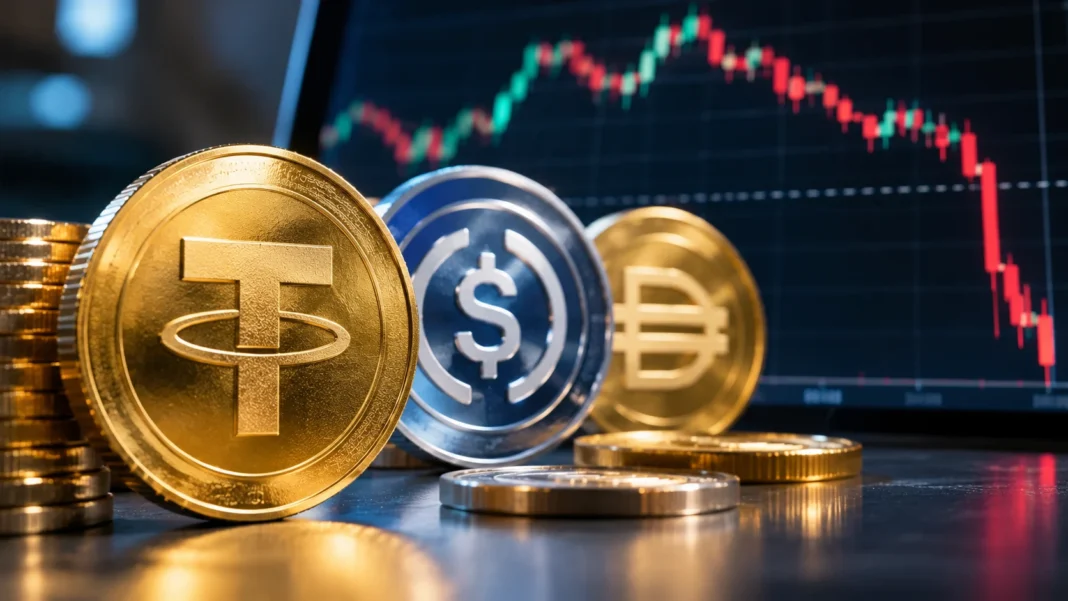

Stablecoin depegging is one of the most important risks to understand in the cryptocurrency market. Stablecoins are designed to maintain a relatively steady value, usually by tracking a currency such as the US dollar. However, their prices can move away from their intended targets when financial pressure, liquidity problems, or declining market confidence disrupt the mechanisms supporting their stability.
Understanding how stablecoin depegging works helps explain why digital assets marketed as stable can still experience significant price changes. Different stablecoin models use reserves, collateral, redemption systems, or automated mechanisms to maintain their value. This guide explores the causes of depegging, historical examples, warning signs, and the financial risks involved when a stablecoin loses its peg.
What Is Stablecoin Depegging?
Stablecoin depegging occurs when a stablecoin’s market price moves away from the value it is designed to maintain. For example, a dollar-pegged stablecoin typically aims to trade near $1. If its market price falls to $0.95 or rises to $1.05, it has moved away from its intended peg.
Not every price movement represents a serious financial problem. Small fluctuations can occur because of trading activity, transaction costs, and temporary differences between supply and demand. However, a large or prolonged deviation may indicate deeper problems involving reserve assets, redemption access, or confidence in the stablecoin’s supporting system.
Depegging can affect stablecoins built using different financial structures. Fiat-backed, cryptocurrency-backed, and algorithmic stablecoins rely on different methods to maintain their target values. Understanding these differences is essential because the reasons for depegging and the likelihood of recovery can vary significantly between models.
How Do Stablecoins Maintain Their Peg?
Fiat-backed stablecoins generally attempt to maintain their value through reserve assets and redemption arrangements. An issuer may hold cash, short-term government securities, or other permitted assets to support outstanding tokens. The stability of this model depends on the quality, availability, and legal protection of those reserves.
Redemption mechanisms are another important part of maintaining a stablecoin peg. When eligible participants can exchange tokens for the underlying currency at a fixed value, they may have an incentive to correct market price differences. However, redemption restrictions, processing delays, and transaction costs can limit how effectively this mechanism works.
Other stablecoins use cryptocurrency collateral or automated supply adjustments instead of conventional reserve structures. These systems may depend on asset valuations, liquidation mechanisms, or incentives involving related tokens. Their stability can become vulnerable during periods of extreme market volatility, particularly when supporting assets lose value rapidly.
What Causes a Stablecoin to Lose Its Peg?
A decline in market confidence is one of the most common factors behind stablecoin depegging. If holders become concerned about reserve quality or the issuer’s ability to process redemptions, selling pressure may increase. This can push the market price below its intended value, especially when buyers become unwilling to absorb the additional supply.
Liquidity problems can also contribute to price instability. A stablecoin may have substantial reserve assets but still face difficulties converting those assets into available cash quickly enough to meet demand. During stressful market conditions, redemption delays or limited trading liquidity can make the difference between the target price and market price more pronounced.
Technical failures and weaknesses in economic design represent additional risks. Smart contract vulnerabilities, malfunctioning liquidation systems, and poorly designed stabilization incentives can interfere with normal operations. In some situations, several problems occur together, creating a cycle of declining confidence, increased selling, and further price instability.
Different Types of Stablecoin Depegging
Temporary depegging occurs when a stablecoin moves away from its target value but later returns to relatively normal trading levels. This may happen during brief periods of market stress or unusually high transaction activity. The return to the target depends on whether supporting financial mechanisms remain functional and market confidence improves.
Prolonged depegging happens when the price remains away from its intended value for an extended period. Persistent problems with reserve availability, redemption arrangements, or financial solvency may prevent the stablecoin from recovering quickly. Such situations can create uncertainty because holders cannot reliably assume that the original target value will be restored.
Permanent depegging represents a more serious breakdown in the stablecoin’s design or financial backing. A token may lose most of its value if its supporting mechanism collapses or its issuer becomes unable to meet obligations. Historical examples show that the word stablecoin does not guarantee permanent price stability or investor protection.
Why Liquidity Matters During Stablecoin Depegging
Liquidity describes how easily an asset can be exchanged without causing a substantial change in its market price. Stablecoins depend on adequate liquidity because users may need to exchange large amounts during stressful market conditions. When market depth becomes limited, even moderate selling pressure can produce noticeable price movements.
Trading liquidity and reserve liquidity are related but different concepts. Trading liquidity concerns how easily tokens can be exchanged in markets, while reserve liquidity concerns the issuer’s ability to meet redemption obligations. A stablecoin can experience problems in one area even when the other appears relatively healthy.
Liquidity becomes especially important during sudden increases in redemption requests. If eligible holders demand cash faster than the issuer can access its reserves, processing difficulties may develop. These conditions can weaken confidence and contribute to a wider depeg, even when some underlying assets retain substantial financial value.
How Market Confidence Affects Stablecoin Prices
Stablecoin stability depends partly on whether market participants believe the token can maintain its intended value. Confidence is influenced by reserve transparency, redemption reliability, issuer credibility, and the broader financial environment. When these factors appear dependable, market participants may be more willing to accept the token near its target price.
Negative news or uncertainty can quickly change these expectations. Concerns about a banking partner, reserve losses, or redemption restrictions may cause holders to question the stablecoin’s financial position. Selling pressure can increase before the full details become available, making the market price sensitive to incomplete or rapidly changing information.
This relationship can create a feedback loop during periods of stress. Falling prices may encourage additional selling, while increased selling pushes prices further from the target. Restoring confidence may require credible financial information, functioning redemption systems, and sufficient liquidity rather than reassuring statements alone.
Real-World Examples of Stablecoin Depegging
The collapse of TerraUSD, commonly known as UST, in May 2022 remains a major example of algorithmic stablecoin failure. UST relied on a stabilization relationship with the related LUNA cryptocurrency rather than conventional dollar reserves. When confidence weakened and selling intensified, the mechanism failed to maintain the intended dollar peg.
Another significant event occurred in March 2023 when USD Coin, or USDC, temporarily lost its dollar peg. The disruption followed concerns about reserves held at Silicon Valley Bank after the bank’s failure. USDC subsequently recovered toward its target as authorities announced protections for the bank’s depositors and market conditions stabilized.
These events demonstrate that stablecoin depegging can produce very different outcomes. TerraUSD experienced a structural collapse, while USDC’s temporary disruption was connected to concerns about access to reserve funds. Examining historical events helps explain why the underlying financial design matters more than the stablecoin label itself.
How Stablecoin Reserves Influence Stability
Reserve assets play an important role in the stability of fiat-backed stablecoins. Cash and highly liquid short-term financial instruments can support redemption arrangements when properly managed. However, reserve quality alone does not eliminate risk because custody arrangements, legal claims, and operational accessibility also affect whether holders can receive payment.
Transparency helps market participants evaluate the assets supporting outstanding stablecoins. Some issuers publish reserve reports, attestations, or other financial disclosures to describe their holdings. However, an attestation is not necessarily equivalent to a full financial audit, and disclosures may not reveal every operational or legal risk.
Reserve concentration can create additional vulnerabilities. If a substantial portion of backing assets depends on one financial institution or investment category, problems affecting that institution may disrupt redemption access. Diversification and appropriate liquidity management can reduce certain risks, but they cannot guarantee that a stablecoin will always maintain its peg.
Risks Associated With Stablecoin Depegging
One major risk of stablecoin depegging is the possibility of financial loss. A token intended to maintain a fixed value may become worth significantly less during market stress. If recovery does not occur, the loss can persist regardless of the stablecoin’s original design or the issuer’s earlier assurances.
Depegging can also affect other parts of the cryptocurrency ecosystem. Stablecoins are frequently used in trading markets, lending arrangements, payment systems, and decentralized financial applications. A sharp change in value may disrupt these activities and affect other assets or contracts that depend on the stablecoin maintaining its target price.
Operational and counterparty risks are equally important. Exchange interruptions, smart contract failures, restricted redemptions, and problems involving financial intermediaries may complicate access to funds. These interconnected risks explain why a stable market price during normal conditions does not necessarily demonstrate resilience during a financial crisis.
How to Evaluate Stablecoin Stability
Evaluating a stablecoin begins with understanding the mechanism behind its target value. Different models depend on reserve assets, collateral requirements, redemption systems, or algorithmic incentives. Each structure creates distinct vulnerabilities, so a clear explanation of the underlying design is more informative than promotional claims about guaranteed stability.
Reserve disclosures and independent assessments can provide additional information about financial backing. Important considerations include asset quality, liquidity, custody arrangements, and whether the issuer provides clear information about outstanding obligations. However, published reports may become outdated, and historical financial information cannot guarantee future redemption performance.
Market behavior also provides useful context about stability. Repeated price deviations, unusually wide trading spreads, and changes in available liquidity may indicate additional uncertainty. These observations should be interpreted carefully because short-term market movements do not always establish whether a stablecoin is financially sound or likely to recover.
Stablecoin Depegging vs. Cryptocurrency Volatility
Traditional cryptocurrencies such as Bitcoin and Ethereum generally allow their market prices to change according to supply, demand, and investor expectations. Their prices are not designed to maintain a fixed relationship with the US dollar. Volatility is therefore a normal characteristic of their market behavior rather than a failure to meet a specific price target.
Stablecoins differ because their primary purpose is to maintain a relatively predictable value. When a dollar-pegged token trades significantly away from $1, the deviation raises questions about the mechanism supporting that relationship. The same percentage price movement may therefore carry different implications for a stablecoin than for an unpegged cryptocurrency.
Nevertheless, stablecoins remain exposed to financial and operational uncertainty. Their price stability depends on functioning markets, credible backing arrangements, and reliable financial infrastructure. Understanding this distinction helps explain why stablecoins are not automatically equivalent to insured bank deposits or cash held directly in a traditional currency.
The Future of Stablecoin Stability and Regulation
Stablecoin regulation has become an important area of financial policy as digital payment systems continue developing. Regulatory approaches may address reserve requirements, redemption rights, financial reporting, operational safeguards, and issuer supervision. However, requirements differ between jurisdictions, and the legal treatment of stablecoins continues to evolve.
Improved transparency and stronger financial controls may help reduce some causes of stablecoin instability. Clear reserve disclosures, appropriate asset management, and dependable redemption processes can support greater confidence. Nevertheless, regulatory oversight cannot eliminate every risk associated with market liquidity, technical failures, or unexpected financial disruptions.
Future stablecoin designs may also introduce changes to settlement systems, reserve management, and transaction infrastructure. Their effectiveness will depend on how well these innovations function under real market pressure rather than only during normal trading conditions. Understanding previous depegging events remains valuable for assessing claims about financial stability and technological reliability.
Conclusion
Stablecoin depegging occurs when a digital token moves away from the value it is designed to maintain. The causes may include liquidity shortages, reserve concerns, declining market confidence, technical failures, or weaknesses in stabilization mechanisms. Although some depegging events are temporary, others can result in severe and lasting financial losses.
Understanding the different stablecoin models helps explain why stability cannot be guaranteed. Fiat-backed, cryptocurrency-backed, and algorithmic systems face different financial and operational risks. Historical events involving TerraUSD and USDC demonstrate how the strength of reserves, redemption arrangements, and market confidence can influence the outcome of a depegging event.
As stablecoins become more widely discussed in digital finance, understanding their limitations remains essential. Clear disclosures, effective financial management, and reliable operational systems may improve resilience, but they cannot remove uncertainty completely. Recognizing how stablecoin stability is tested provides a more realistic understanding of the risks behind assets designed to maintain fixed values.
Frequently Asked Questions
What Does Stablecoin Depegging Mean?
Stablecoin depegging means a token’s market price has moved away from its intended target value. For example, a dollar-pegged stablecoin trading at $0.95 has fallen below its expected $1 price.
Why Do Stablecoins Lose Their Peg?
Stablecoins may lose their peg because of liquidity shortages, reserve concerns, increased selling pressure, redemption problems, or technical failures. The underlying cause depends on how the stablecoin is designed and supported.
Can a Stablecoin Recover After Depegging?
Yes, some stablecoins recover when liquidity improves and confidence returns. However, recovery is not guaranteed, particularly when a stablecoin experiences serious reserve losses or a failure of its stabilization mechanism.
Are Fiat-Backed Stablecoins Completely Safe?
No, fiat-backed stablecoins still face reserve, banking, operational, liquidity, and redemption risks. Their stability depends on the quality of supporting assets and whether the issuer can meet its financial obligations.
What Is the Difference Between Temporary and Permanent Depegging?
Temporary depegging occurs when a stablecoin moves away from its target before recovering. Permanent depegging happens when the supporting system fails to restore the intended value, potentially causing lasting financial losses.